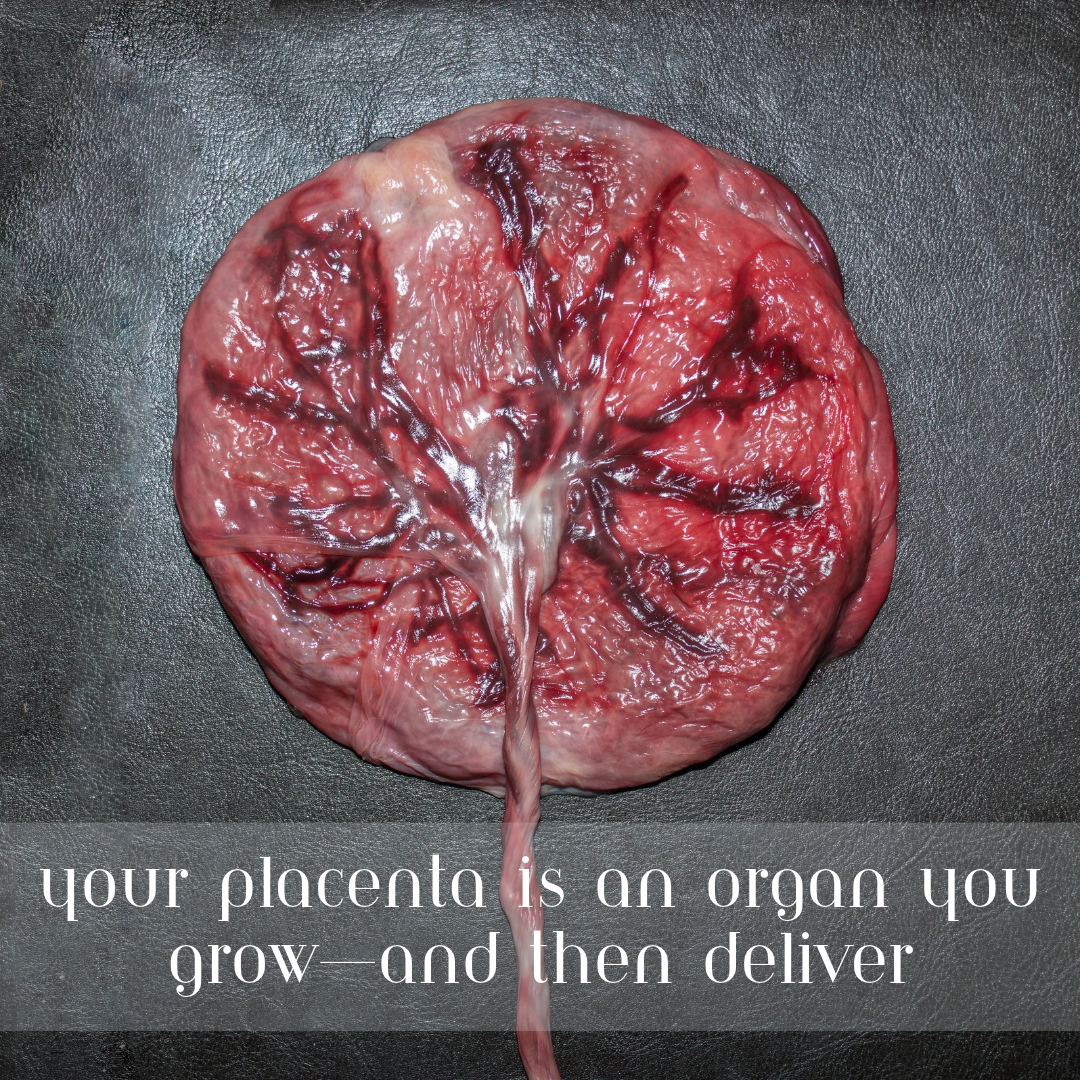
Pregnancy involves growing more than a baby. Your body also develops a temporary organ called the placenta. It forms early in pregnancy and attaches to the lining of your uterus, connecting to your baby through the umbilical cord. For months, this organ helps support a baby who cannot yet breathe air, eat food, or manage life outside your body. Source: National Institute of Child Health and Human Development
The placenta transfers oxygen and nutrients from your circulation to your baby’s circulation. It also helps move carbon dioxide and other waste products away from your baby. Although the two blood supplies come very close together, they normally remain separated by a thin layer of tissue. The placenta also produces hormones that help maintain pregnancy. Source: Physiology of the Placenta
When your baby arrives, the placenta still needs to be delivered. After a vaginal birth, this happens during the third stage of labor, when contractions help the placenta separate from the uterine wall and move out through the vagina. During a cesarean birth, the clinician usually removes it through the surgical opening. Your care team continues monitoring you because the work of birth extends beyond your baby’s arrival.
After the placenta separates, your uterus needs to contract firmly to compress the blood vessels where it was attached. If the uterus does not contract well, or pieces of placenta remain inside, excessive bleeding can occur. Understanding this stage helps explain why your team checks your bleeding and uterus even while you are meeting your newborn. Those first moments include both bonding and essential care for your recovery. Source: ACOG—Conditions to Watch for After Childbirth
Leave a Reply