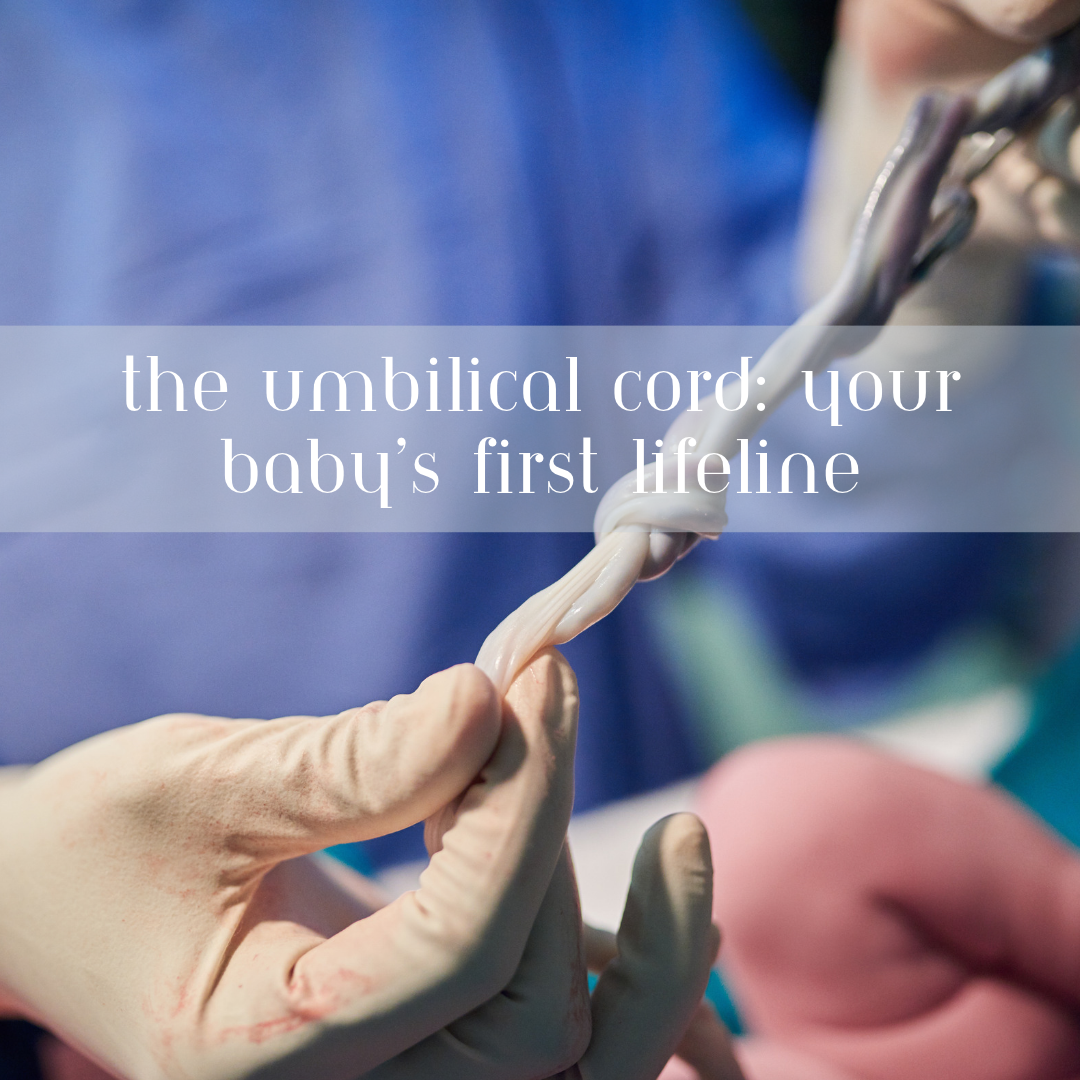
The umbilical cord connects your baby to the placenta throughout pregnancy. It is a flexible structure containing blood vessels protected by a cushioning material called Wharton’s jelly. That cushioning helps protect the vessels as your baby moves and the cord bends inside the uterus. Source: The Development and Structure of the Umbilical Cord
A typical cord contains one vein and two arteries. The vein carries oxygen-rich blood and nutrients from the placenta toward your baby. The arteries carry blood back toward the placenta, where carbon dioxide and other waste products can be exchanged. This circulation supports your baby while their lungs and other organs prepare for life after birth. Source: Fetal Circulation
After birth, blood can continue moving through the cord for a short time. Delaying clamping allows additional blood to transfer from the placenta to the newborn. Professional guidance supports delayed clamping in many circumstances, while the timing depends on the baby’s condition, the mother’s condition, and the clinical situation. This makes cord clamping a useful topic to discuss before labor. Source: ACOG—Delayed Umbilical Cord Clamping After Birth
Once the cord is clamped and cut, a small stump remains attached to your baby’s abdomen. It dries and eventually falls off, leaving the belly button. Before going home, ask your newborn’s care team to explain cord care and what changes should prompt a call. A structure that supported your baby throughout pregnancy becomes one of the first small areas you learn to care for together.
Leave a Reply