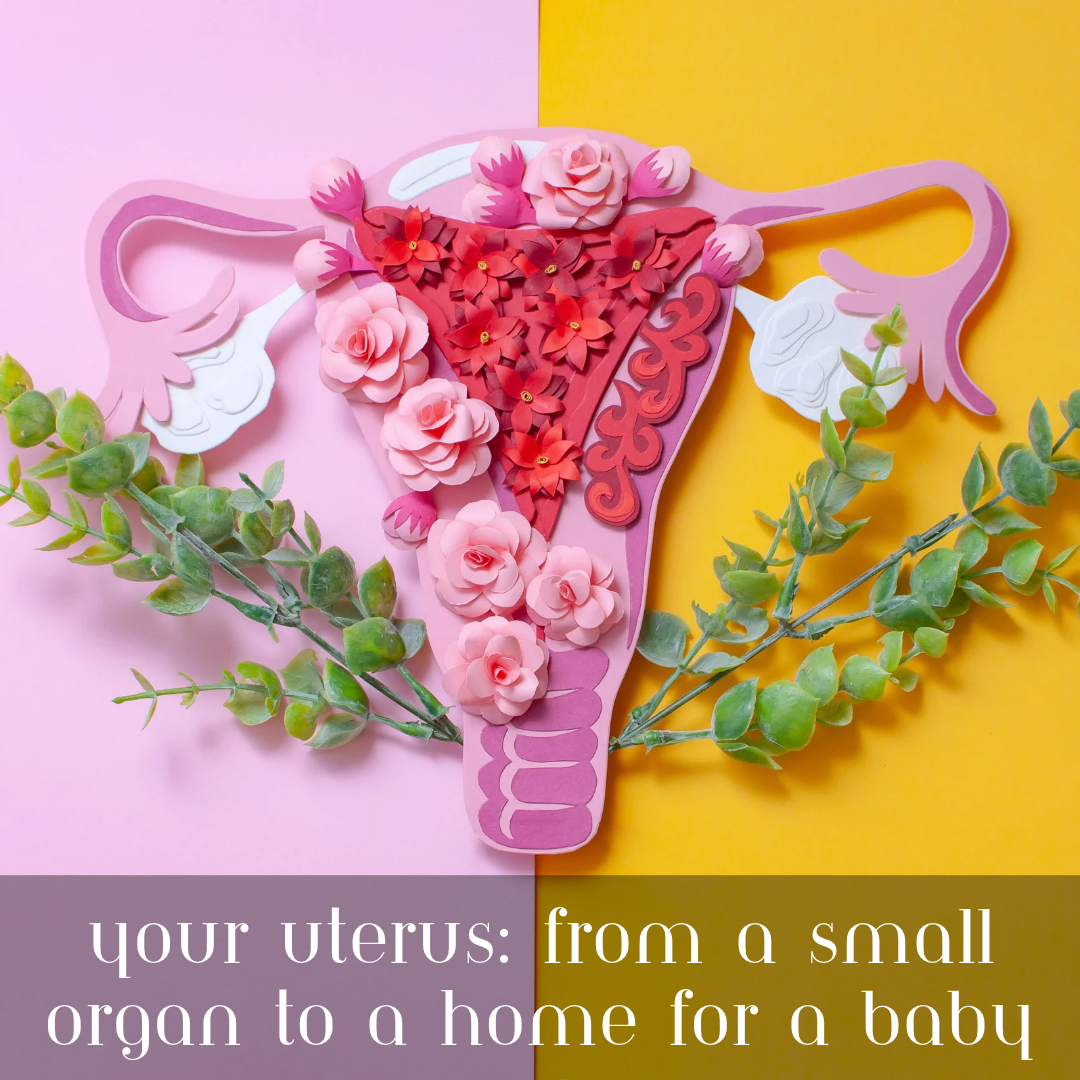
Before pregnancy, your uterus is a relatively small muscular organ located in your pelvis. During pregnancy, it expands enough to accommodate your baby, the placenta, and amniotic fluid. This transformation involves growth and stretching of its muscular tissue, alongside changes in the blood vessels supplying the pregnancy.
As the uterus grows upward into your abdomen, it changes the space available to nearby organs. Pressure on the bladder can contribute to frequent bathroom trips, while changes around the digestive system can affect comfort. Your changing belly reflects an internal rearrangement as well as your baby’s growth.
During labor, the uterus takes on another demanding role. Its muscular contractions help the cervix open and move the baby toward birth. After delivery, contractions continue, helping the uterus become smaller again. These postpartum cramps are often called “afterpains,” and they may feel more noticeable during breastfeeding. Source: ACOG—Postpartum Pain Management
The process of returning toward its pre-pregnancy size is called involution, and much of it occurs during the first six weeks after birth. That timeline does not mean your entire body will feel recovered by six weeks. Your uterus has spent months changing, and recovery deserves time, support, and attention to symptoms rather than pressure to meet a particular appearance or schedule. Source: ACOG—Postpartum Recovery Resources
Leave a Reply