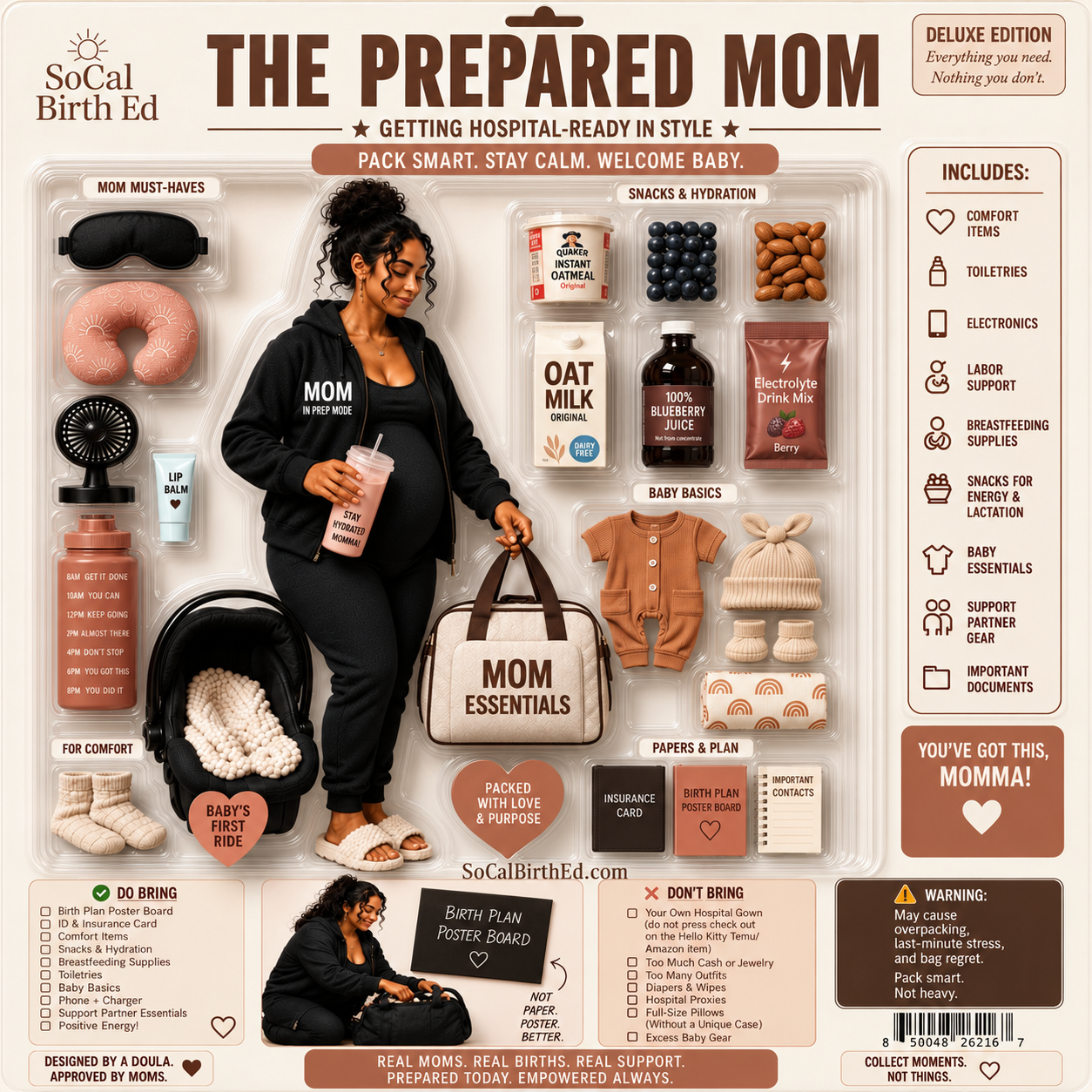
Pack smart. Stay calm. Welcome baby.
Your hospital bag should make it easier to find what you need when you need it. A few familiar comforts, your important documents, and something comfortable to wear home can go a long way.
Before you start shopping, ask your hospital what it provides. Then use this checklist to pack for yourself, your baby, and your support person.
Important Documents and Birth Preferences
Keep these together in a folder or an easy-to-reach pocket:
- Photo ID and insurance card
- Hospital registration paperwork, if requested
- Your pediatrician’s contact information
- Emergency contacts
- A current medication list, including allergies
- Your birth preferences or personalized Birth Board
A Birth Board displays your preferences in a large, easy-to-read format. Your team can use it as a starting point for conversations about comfort, communication, feeding, and newborn care. Keep a photo on your phone as a backup.
Your preferences belong in the conversation, even when circumstances change.
Comfortable Clothing for You
Choose clothes that are soft, loose, and easy to put on.
- A comfortable going-home outfit
- Loose pajamas or a button-front sleep shirt
- A nursing bra or soft, supportive bra
- Comfortable underwear
- Warm socks
- Non-slip slippers or sandals
- Shower shoes
- A lightweight robe, if you enjoy wearing one
Pack something that fits your late-pregnancy body. You do not need to plan around fitting into your pre-pregnancy clothes before leaving the hospital.
Toiletries and Everyday Essentials
Travel-size products help keep your bag manageable.
- Toothbrush and toothpaste
- Deodorant
- Face wash and moisturizer
- Hairbrush or comb
- Hair ties or a bonnet
- Lip balm
- Body wash, shampoo, and conditioner
- Glasses and their case
- Contact lens supplies, if needed
- A bag for worn clothing
Bring a list of your medications and ask the hospital how to handle any medicines you normally take.
Comfort Items for Labor and Rest
Choose the items you already find comforting. You do not need every product marketed for birth.
- An eye mask
- Earplugs or headphones
- A small portable fan
- A massage ball
- A favorite playlist
- Affirmation cards
- A familiar pillow with a distinctive pillowcase
- A light blanket, if desired
Ask about hospital rules before bringing heating devices, scented products, speakers, or battery-operated candles.
Doula tip: Show your support person where everything is packed. During labor, you may appreciate being able to say “the fan” without explaining which zipper to open.
Electronics
- Phone
- A long charging cable
- Portable charger
- Headphones
- Camera, if desired
Keep charging supplies together in a small pouch. Check the hospital’s photography and recording policies before delivery.
Snacks and Drinks
Pack easy-to-store foods you enjoy for recovery and for your support person.
Options include:
- Crackers
- Granola or protein bars
- Applesauce pouches
- Dried fruit
- Nuts or nut butter packets, if suitable for your allergies
- Instant oatmeal
- Shelf-stable snacks that fit your dietary needs
- A reusable water bottle
Ask your care team what you may eat and drink during labor. Instructions can change depending on your care, anesthesia plans, and individual circumstances.
If you are told to have clear liquids only, ask which drinks are permitted. Oat milk, smoothies, and meal-replacement shakes should not be treated as clear liquids.
For postpartum snacks, choose foods for nourishment and convenience. You do not need special cookies, oats, or blueberry juice to make breast milk.
Feeding Supplies
Ask what feeding support and equipment your hospital provides before packing extra supplies.
Depending on your plans, you may want:
- A nursing or supportive bra
- Breast pads
- Nipple cream, if desired
- A pumping bra, if you expect to use one
- A nursing pillow, if you find it helpful
If you plan to pump or formula-feed, ask the hospital what to bring. This is especially useful if you anticipate needing a particular pump, bottle, or formula.
Baby’s Going-Home Essentials
Keep your baby’s bag simple:
- One or two going-home outfits
- Socks or booties
- A light blanket for appropriate use
- A hat, if needed
- A small bag for soiled clothing
- A properly installed rear-facing car seat for the ride home
Choose clothing that allows the car-seat harness to fit correctly. Follow the car-seat manufacturer’s instructions when securing your baby.
Your Support Person’s Bag
Your support person should pack their own essentials and know where yours are.
- A change of clothes
- Toiletries
- A sweatshirt or light jacket
- Snacks and a water bottle
- Phone and charger
- Any medications they need
- Something quiet to do during downtime
- A pillow or blanket, if permitted and needed
Before birth, talk about practical responsibilities: carrying bags, updating family, finding snacks, and keeping your phone charged.
If You Are Preparing for a Cesarean Birth
Focus on clothing that is easy to manage and comfortable around your abdomen:
- Loose dresses or roomy pants
- Underwear with a waistband that avoids your incision
- Slip-on shoes
- Toiletries and chargers within easy reach
- An abdominal binder only if your care team recommends one
Ask your team about incision care, getting into the car, and staying comfortable during the ride home.
What the Hospital May Already Provide
Call ahead or check your hospital’s packing guidance. Available supplies vary, but may include:
- Hospital gowns
- Postpartum pads and disposable underwear
- A peri bottle
- Diapers and wipes
- Basic baby clothing and blankets
- Feeding supplies
- Breast pumps for use during your stay
- Basic recovery supplies
Confirm anything you are counting on, especially feeding supplies and items needed for discharge.
What You Can Usually Leave at Home
Save space by skipping:
- Expensive jewelry
- Large amounts of cash
- Multiple newborn outfits
- Bulky baby equipment
- Full-size toiletries
- Large makeup or hairstyling kits
- Extra supplies your hospital has confirmed it provides
A personal hospital gown is optional. You can use the hospital’s gown. If you prefer your own, ask whether it allows access for monitoring, treatment, and feeding—and be prepared to change if needed.
When to Pack
Start gathering your essentials during the third trimester. Having your bag ready around 35–37 weeks can be a practical goal, with earlier preparation if your care team anticipates an earlier birth.
Keep a short last-minute list beside the bag:
- Phone
- Charger
- Wallet and ID
- Glasses
- Birth Board
- Anything your hospital specifically requested
Store the bag somewhere easy to grab, and make sure your support person knows where it is.
Prepare With Confidence
You deserve to arrive with your questions welcomed, your preferences ready to share, and the items that help you feel comfortable.
At SoCal Birth Ed, virtual doula support can help you think through your packing list, prepare your birth preferences, and plan how your support person can help during labor and recovery.
Explore support at SoCalBirthEd.com.
Your birth. Your voice. Your preparation.
Leave a Reply